
Picture this: Sarah, a freelance writer, spent endless hours bidding on Upwork gigs. She worked harder than ever, yet her income stayed flat at $3,000 a month. Then, she shifted to smart strategies like building her network and picking up AI tools; within a year, she doubled that to $6,000 without adding more hours.
You’re probably in a similar spot. Platforms promise easy clients, but over 70% of freelancers now land jobs through referrals and personal networks, not just marketplaces. That’s the big shift hitting by 2026 as the freelance world grows to 86 million in the U.S. alone. Clients trust people they know, and those with their own websites earn 35% more on average.
The good news? You can increase your freelance income over time with proven steps that build momentum. No luck needed, just consistent action on networking, AI boosts, skill upgrades, and productivity tweaks.
In the next sections, we’ll break it down into four clear steps. First, we’ll cover networking to fill your pipeline. Then, AI tools that speed up your work. After that, skill upgrades for higher rates. Finally, productivity hacks to scale without burnout. Stick around; these changes add up fast.
Build Relationships That Bring in Repeat Business and Referrals
Networking leads the way to higher freelance income. In 2026, 56% of US freelancers land jobs through networking and referrals. That’s up from 30% in 2024. Clients pick trusted contacts over crowded platforms. These connections spark repeat work and word-of-mouth gigs. You gain steady income without constant hunting. Start by showing up in the right spots and nurturing ties.
Join Online Communities and Speak Up to Get Noticed
Online groups put you in front of potential clients. Web developers thrive in places like the r/webdev subreddit, where pros share career tips. Content writers connect on r/copywriting, a spot for gig talk and portfolio reviews. Slack channels and Discord servers add real-time chats, such as the Copywriting Collective Discord.
Share value often to stand out. Post one tip each week. Answer questions with clear examples. Soon, people notice your expertise.
Follow these steps to get started:
- Pick two communities in your niche. Spend 15 minutes daily reading posts.
- Share a quick tip or resource every week. Link to your past work if it fits.
- Offer help in threads. Solve one problem per session without selling.
- Speak at a webinar or local meetup. Use community feedback to prep your talk.

Communities build your rep fast. One developer landed three gigs after weekly r/webdev tips.
Turn One-Time Clients into Lifelong Income Sources
Great communication keeps clients coming back. Reply within hours. Send updates they don’t expect, like “60% done, draft by Friday.” Ask for feedback early. These moves build trust and show you care.
Take Mike, a content writer. He finished a blog project for a startup. Then he emailed monthly updates on industry trends. Six months later, they hired him for ongoing work. Referrals followed. His income jumped 40% from repeats.
Stay in touch without nagging. Check in quarterly. Share a relevant article. Offer a quick audit.
Use these email templates:
Project Update:
Hi [Client Name],

Your [project] is 60% complete. Draft hits your inbox Friday. Any changes to priorities?

Best,
[Your Name]
Follow-Up Check-In:
Hi [Client Name],

Hope all's well. Saw this [link to article] on [topic]. Thought of your team. Need help with anything new?

Cheers,
[Your Name]

Repeat clients pay more and refer others. Focus here, and your pipeline fills itself.
Master High-Demand Skills and Price Them Right for Premium Pay
You already network and use AI basics. Now level up your skills so clients pay premium rates. Demand surges for specific talents in 2026. US freelancers average $37 to $52 per hour overall. Top skills hit $50 or more because businesses need quick results in tech and marketing. Pick these, upskill fast, then price based on real value. Clients stick when you deliver standout work.
Pick Skills That Clients Pay Top Dollar For Right Now
Clients chase freelancers who solve hot problems. AI and web skills top lists with 20% growth through 2034. Combine two, like SEO writing plus data analytics, and charge 30% to 50% more. Why? You offer full packages, not piecemeal fixes. Here’s a breakdown of five high-pay skills, their rates, and free upskill paths.
| Skill | Average US Hourly Rate | Why It Pays Well |
|---|---|---|
| AI/ML Engineering | $50–$200 | Businesses automate fast; demand jumps 20%. |
| Web Development (Webflow, full-stack) | $15–$150 | No-code tools speed sites; 21% of gigs. |
| Content/SEO Writing | $15–$45 | SEO drives traffic; technical niches hit $55/hour. |
| UI/UX Design | $21–$100 (in design category) | User-friendly apps boost sales. |
| Data Analytics/Automation | $25–$90 | Ties to marketing; cuts costs for clients. |
Start with web development. Use no-code like Webflow. Clients pay $50+ for fast sites without devs. Try the free Webflow University freelance boot camp to build portfolios in weeks.
AI skills explode next. Add prompts or simple models to any gig. Demand rose 27% lately. Check 10 free AI courses for marketers to learn basics in days.
Content and SEO pair well. Write posts that rank. Upskill via free Google Analytics certs. UI/UX uses Figma free tier. Analytics tools like Google Data Studio start free too. Practice daily, add to your site, then pitch combos.

One writer added SEO analytics. Her rate doubled to $60/hour. You can too.
Track Your Time to Set Rates That Match Your Value
Undercharging kills profits. You think a logo takes two hours. It drags to five with revisions. Track time first, then set rates right. Free tools make it simple. Aim for $50+ effective hourly after all tasks.
Start with apps like Toggl or Clockify. They run in browsers, no cost for solos. See the top free time trackers for freelancers for picks that invoice too.
Calculate like this. Say you earn $5,000 monthly goal. Work 100 billable hours. Base rate hits $50. Add 30% for taxes, admin. New target: $65/hour.
Expenses + desired salary = annual need
Annual need / 2,000 work hours = target rate
Example: $80,000 goal plus $20,000 expenses equals $100,000. Divide by 2,000 hours. Charge $50 minimum.
Raise rates 20% yearly. Last year’s $50 becomes $60. Clients accept because your skills grew. Test on new gigs first. Track shows value, so you avoid lowballs.
Adjust mid-project if needed. Five hours on a “quick” task means quote higher next time. Clients respect data. Your income climbs as rates match effort.
Work Smarter with AI and Habits to Handle More Projects
You network and upskill, yet time limits your gigs. Now add AI and smart habits. These let you finish work faster and take on more clients. As a result, your income grows without extra hours. About 31% of US freelancers use AI tools today, up sharply from 2023 levels. Many more plan to adopt them soon. AI handles drafts, code, images, and data tasks. Pair it with habits like batching, and you double output. Clients love quick turnarounds. You avoid burnout and charge more.
Leverage Free AI Tools to Speed Up Your Daily Work
Free AI tools cut hours from routine jobs. Writers draft posts in minutes. Coders debug fast. Designers create images without Photoshop. Start with basics like ChatGPT or Google Gemini for text and code. Use Ideogram for images. All offer free tiers.
Take a blog post draft. Follow these steps:
- Outline first. Prompt Gemini: “Create a 10-point outline for a post on freelance tips, US-focused.” It spits out structure in seconds.
- Write sections. Feed ChatGPT the outline plus your voice: “Expand bullet 3 into 200 words, conversational tone, active voice.” Edit lightly for polish.
- Add code snippets. Ask Claude.ai: “Write clean HTML for a pricing table.” Test it right away.
- Generate images. In Ideogram, type “cozy freelancer desk, cinematic style.” Pick one, resize free.
- Analyze data. Use Gemini to summarize stats: “Turn this freelancer survey into key points.”
See a tested list of best free AI tools for freelancers in 2026. One writer cut draft time from 4 hours to 45 minutes. You handle two posts daily now.

Adopt Simple Habits That Double Your Output
Habits turn AI gains into steady wins. Batch similar tasks. Run short sprints. Reuse templates. Therefore, you focus deep and finish fast.
Batch work like this: Group emails Monday mornings. Handle all invoicing Tuesdays. One designer batches graphics edits. She frees afternoons for new gigs.
Use sprints with Pomodoro. Work 25 minutes, break 5. Tools like Pomofocus or Pomoforge track them free. Set weekly goals: three client pitches, two drafts. Hit them in focused bursts.
Templates save setup time. Build Google Docs for proposals. Customize per client. A developer templates code boilerplate. He starts projects in 10 minutes.
Try these apps: Freedom blocks distractions during sprints. Pomofocus times sessions. Notion stores templates. Batch emails, sprint on creative work, templatize repeats. Output doubles. Income rises as you stack projects.
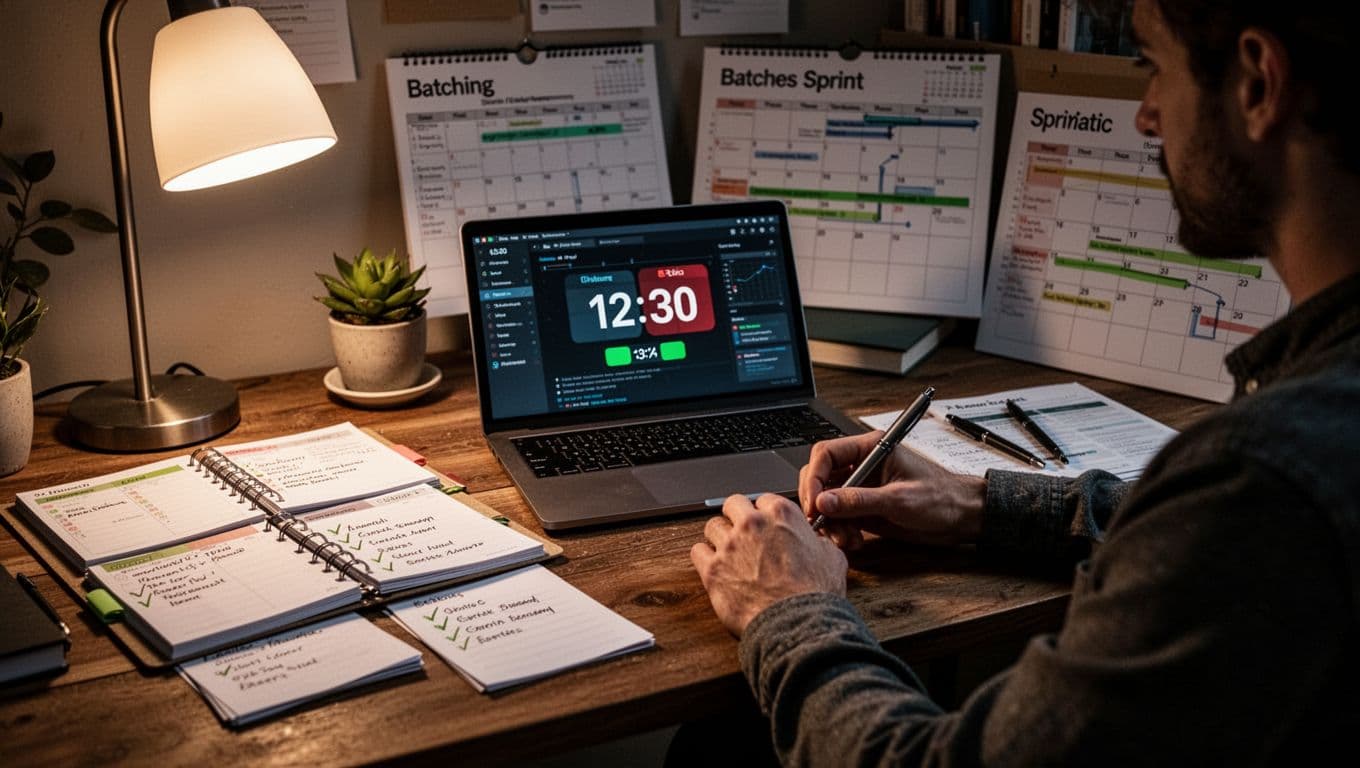
These steps fit any niche. Apply them, and watch your capacity grow.
Create a Standout Portfolio and Brand to Attract Dream Clients
You’ve networked, upskilled, and boosted output with AI. Now build a portfolio and brand that draws premium clients directly. Platforms like Upwork feel crowded; only 21.5% of US freelancers get gigs there. In contrast, 51.5% use networking sites tied to personal profiles, and 49.7% rely on word of mouth. Your own site skips fees and positions you as the expert. Clients pay more for pros who show clear business wins.
Build a Simple Website That Showcases Your Best Work
Ditch platform limits. Set up your site in days with easy builders. They handle hosting and design, so you focus on content. Popular picks include Wix and others listed in top portfolio builders for 2026. Add pages for services, testimonials, and contact forms.
Start small. Pick three projects. Feature before-and-after results. Link to your calendar for bookings. Then share the URL everywhere. Clients book faster when they see your full story.

One designer switched to her site. Referrals tripled in months.
Write Case Studies That Highlight Real Business Results
Case studies sell harder than samples. Pick wins with numbers, like “boosted traffic 40%.” Structure each: problem, your fix, results, client quote.
For example, outline a writing gig. State the client’s pain. Describe your steps. End with metrics and feedback. See how to craft case studies that win clients for templates.
Post one every two weeks. They build trust and SEO.
Share Tips Weekly to Grow Your Expert Brand
Content keeps you top of mind. Post tips or quick wins 1-2 times a week on your blog or LinkedIn. Optimize old Upwork profiles too; add site links and keywords.
As a result, searchers find you first. Long-term, this attracts dream clients who pay premium rates. Your income climbs steadily.
Conclusion
You started with Sarah’s story of flat income at $3,000 a month. Now you know the path she took. Network for referrals and repeats. Upskill in high-demand areas, then price based on value. Boost output with AI tools and smart habits. Build a portfolio and brand that pulls in premium clients.
These steps create steady growth. In 2026, specialists who mix AI skills with strong relationships earn top rates, like $75 or more per hour for the best. Clients flock to pros who deliver results fast. Your income doubles, just like Sarah’s did to $6,000.
Pick one tip today, such as joining a community or tracking time. Check progress monthly, and adjust. Share your wins in the comments below or join my newsletter for more freelance tips.
Freelancing rewards action. Start now, and watch your income climb.